Firearms 2026: The Practical Shooter’s Reality Check
The ATF’s 2022 pistol brace ruling was finalized in 2023, creating a massive new class of regulated short-barreled rifles overnight. As of 2026, the legal and practical fallout has fundamentally reshaped the market, turning what was once a simple accessory into a primary driver of new firearm designs and consumer choices. If you haven’t adapted your kit and your understanding, you’re already behind.
The New Normal: Pistol Caliber Carbines Dominate the Practical Range
With the SBR landscape more complicated, the unregulated Pistol Caliber Carbine (PCC) has cemented its role as the go-to for home defense and competition. The 9mm AR-platform PCC, like the CMMG Banshee or the SIG MPX, offers rifle ergonomics with cheaper ammo and minimal recoil. We’re seeing a surge in models that use common pistol magazines—Glock mag compatibility is now a standard feature, not a niche option. For the shooter who wants a compact, effective package without the NFA hassle, a quality 9mm carbine is the undisputed answer. At Oregonarms Ammunition, we consistently see higher demand for 9mm NATO-spec ammunition from PCC owners who put thousands of rounds downrange annually.
Rimfire Renaissance: Training Becomes Affordable Again
Centerfire ammunition prices stabilized but never returned to pre-2020 levels. The result? A massive, sustained investment in .22 LR training platforms. Firearms like the Taurus TX22, the Smith & Wesson M&P 15-22, and the Ruger Mark IV aren’t just plinkers anymore; they’re essential, high-round-count training tools. Manufacturers have responded with .22 LR versions of popular duty pistols and rifles that closely mimic their centerfire counterparts’ manual of arms. This isn’t a trend; it’s a permanent shift in how shooters maintain proficiency. Stocking up on high-quality, reliable .22 LR, like the CCI Standard Velocity we carry, is now a fundamental part of responsible gun ownership.
The Duty Optics Standard: Enclosed Emitters and Solar Failsafes
The red dot sight on a defensive or duty pistol is now assumed. The debate for 2026 isn’t *if* you run an optic, but *which* generation. The open-emitter RMR-type sight is being rapidly supplanted by enclosed-emitter optics like the Holosun EPS and the Aimpoint Acro P-2. The reason is simple: they don’t foul with lint or snow, and they’re far more durable. Furthermore, solar failsafe technology, which keeps the dot running if the battery dies, has moved from a premium feature to a baseline expectation on models like the Holosun 507COMP. Your optic choice now directly dictates your holster options, so plan your entire carry system accordingly.
Action Evolution: The Rise of the Straight-Pull and Lever-Action
Political pressure in certain states has created a booming market for non-AR, centerfire rifles that maintain high practical utility. The straight-pull rifle, like the Springfield Armory Waypoint or the German-made Mauser M18, offers bolt-action accuracy in a faster, more modern chassis system. Simultaneously, lever-actions chambered in .357 Mag/.38 Spl or .44 Mag are seeing a major revival, thanks to new models from Henry and Marlin that feature side-loading gates, picatinny rails, and threaded barrels. These aren’t your grandfather’s cowboy guns; they’re viable, legally compliant tools for hunting and defense in restrictive jurisdictions. You can browse our rifle ammunition categories to match the right load to these modern classics.
What’s the single most important change for an AR-15 owner to be aware of in 2026?
The legal status of pistol braces is settled but restrictive. If you have a braced pistol, it must be registered as an SBR, reconfigured as a standard pistol (with a bare buffer tube), or have a 16″+ barrel installed. The new crop of “stockless” buffer tube covers or proprietary recoil systems designed to be fired from the chest are under intense scrutiny. The safest, most hassle-free route for a compact AR is to pin and weld a muzzle device to achieve a 16-inch barrel, or to simply build or buy a registered SBR from the start.
Is the 9mm still the best caliber for a defensive handgun?
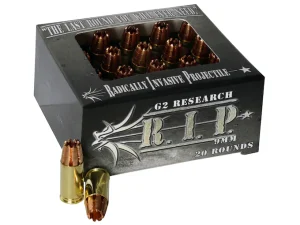
For the vast majority of users, yes. The combination of modern hollow-point bullet design (like Federal HST or Speer Gold Dot), high capacity, and manageable recoil is unbeatable for a daily carry gun. While micro-compact .380s like the Ruger LCP Max have their place for deep concealment, the 9mm remains the standard for a reason. Advances in 9mm defensive ammunition available at Oregonarms Ammunition ensure consistent expansion and penetration from both short-barrel pistols and full-sized duty guns.
What should I look for in a new defensive shotgun in 2026?
Forget the basic bead sight. The standard now is a receiver-mounted picatinny rail for mounting a red dot sight. Models like the Mossberg 590M with a detachable magazine or the Beretta 1301 Tactical with its ultra-fast action are setting the bar. Additionally, a stock with a modern adjustable comb and length of pull, and a muzzle device capable of accepting chokes (like the Carlson’s Compensator/Choke Tube system), are features that separate a modern tool from a legacy design. Your shotgun should be as adaptable as your rifle.
The landscape is defined by adaptation—to regulations, to economics, and to technological progress. The tools that matter are those that offer real utility without unnecessary legal entanglement. To see the firearms and ammunition that meet this 2026 standard, browse our firearms collection and build a system that works for the real world.
Last updated: March 25, 2026